全球降息潮的來臨,一文告訴你什麼是降息
什麼是降息?
銀行利用利率調整,來改變現金流動的金融方式。當銀行降息時,把資金存入銀行的收益減少,所以降息會導致資金從銀行流出,存款變為投資或消費,結果是資金流動性增加。
一般來說,降息會給股票市場帶來更多的資金,因此有利於股價上漲。降息會刺激房地產業發展。降息會推動企業貸款擴大再生產,鼓勵消費者貸款購買大件商品,使經濟逐漸變熱。
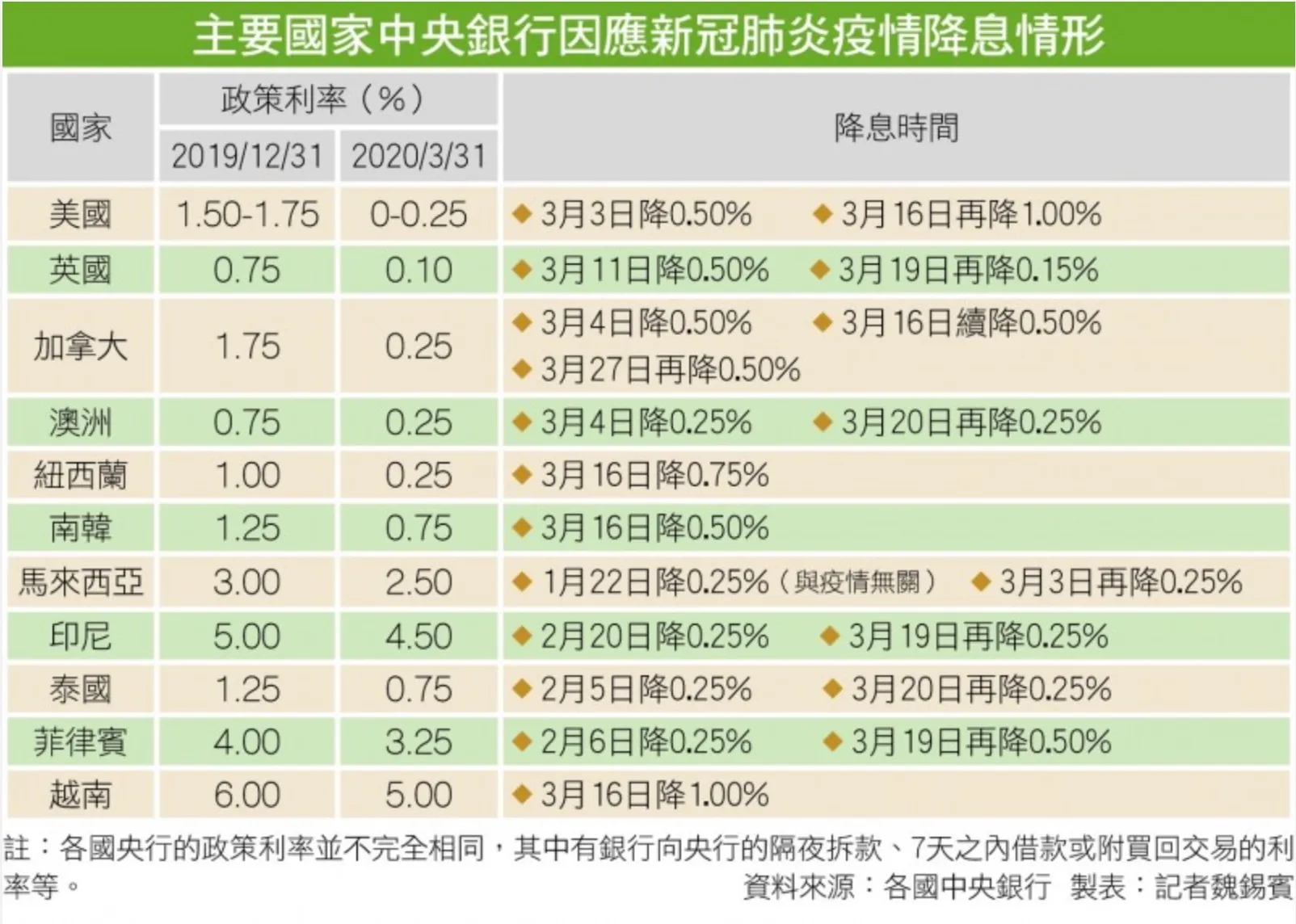
為了應對疫情對實體經濟和金融系統的衝擊,美聯儲率先降息100個基點,進入零利率時代。隨後,多個國家及地區央行同樣採取降息或其他寬鬆的貨幣政策。據不完全統計,2020年上半年,上半年全球各家央行總共降息超過200次。
Major countries' central bank cut interest rates in 2020
為什麼央行選擇降息?
對大多數央行而言,首要職責是保就業和合理通脹。央行降息增加資金流動性,促進消費、利好股市。
聯邦基金利率很重要,因為許多其他的國內和國際利率與利率直接相關或緊密聯繫。美聯儲降息,指的是降低聯邦基金利率,降低1%後,為0%至0.25%。簡而言之,該利率是美國銀行和銀行之間互相借錢時的利率。
如果這一利率升高,銀行在給企業或個人放貸時的利率也水漲船高。反之,降息後,銀行放貸的利率就會降低,將刺激企業和個人貸款,借錢更容易,一般來講其效果是整體經濟得到刺激,變得更加活躍。
美聯儲通過調節這一利率來達到一個目的——保持美國最大限度的就業和價格穩定。在經濟疲軟時降息,向市場注入更多流動性資金,刺激經濟。在經濟強勁時加息,減少貨幣供應,防止經濟過熱。
The Fed lowers interest rates to stimulate economic growth. Lower financing costs can encourage borrowing and investing. However, when rates are too low, they can spur excessive growth and perhaps inflation. Inflation eats away at purchasing power and could undermine the sustainability of the desired economic expansion.
On the other hand, when there is too much growth, the Fed will raise interest rates. Rate increases are used to slow inflation and return growth to more sustainable levels. Rates cannot get too high, because more expensive financing could lead the economy into a period of slow growth or even contraction.
The Fed adjusts this interest rate to achieve one goal-to maintain maximum employment and price stability in the United States. When the economy is weak, interest rates will be cut to inject more liquidity into the market to stimulate the economy. Raise interest rates when the economy is strong, reduce the money supply, and prevent the economy from overheating.
央行降息有什麼影響?
一、由於降息可以為市場提供更充足的流動性,一般被認為是股市的利好消息。
因為貨幣的價格下降,使得企業運營成本降低,也使得股市融資成本降低,這都會刺激更多資金向股市流動,也會刺激企業投資。
例如,今年三月,美聯儲宣布大幅降息50個基點,受到大幅降息的消息影響,當天一路下跌的美股立刻直線上揚,但是持續時間不長,走勢震盪。並不是每一次美聯儲降息,股市都一定會大漲。但是,像這樣的情況,更加加深了廣大投資者的信念:即如果央行降息的話,對於股市來說就是個好消息。
標普500指數與美聯儲利率改變
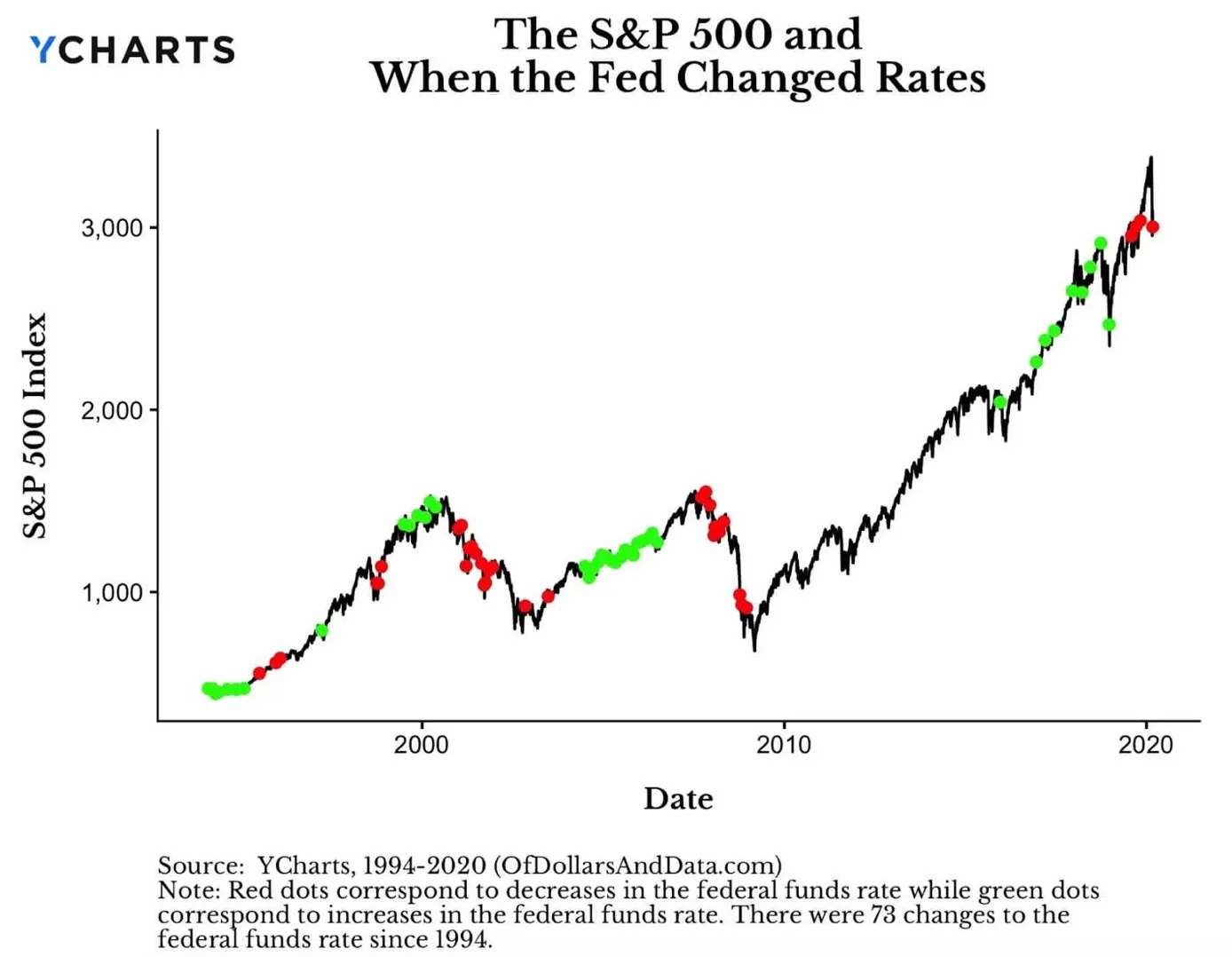
紅點對應於美聯儲利率的下降,綠點對應於美聯儲利率的上調
圖:YCHARTS
二、降息能間接刺激消費增長
When rates go down, borrowing becomes cheaper, making large purchases on credit more affordable, such as home mortgages, auto loans, and credit card expenses.
When rates go up, borrowing is more expensive, putting a damper on consumption. Higher rates, however, do benefit savers who get more favorable interest on deposit accounts.
(1)存款利息降低,國內的通脹率上升,這使得無風險投資收益減少,會迫使存款人把存款拿出來,用於消費和投資。
(2)央行降息,會使貸款利率下降,企業的融資成本降低,利潤空間增大,企業就會增加投資,擴大生產規模,會購買原料、機器設備、建造廠房等,這些需求都能拉動消費。
(3)銀行的利息下降,貨幣超發,會導致國債利率帶也呈現下行趨勢,而本幣貶值,此舉有利於促進出口,又因為本幣貶值,導致進口商品價格上漲,國內消費更會傾向於購買本國的產品。
降息只能對刺激消費起到間接性作用,要想刺激消費增長,靠降息可能會收效甚微。