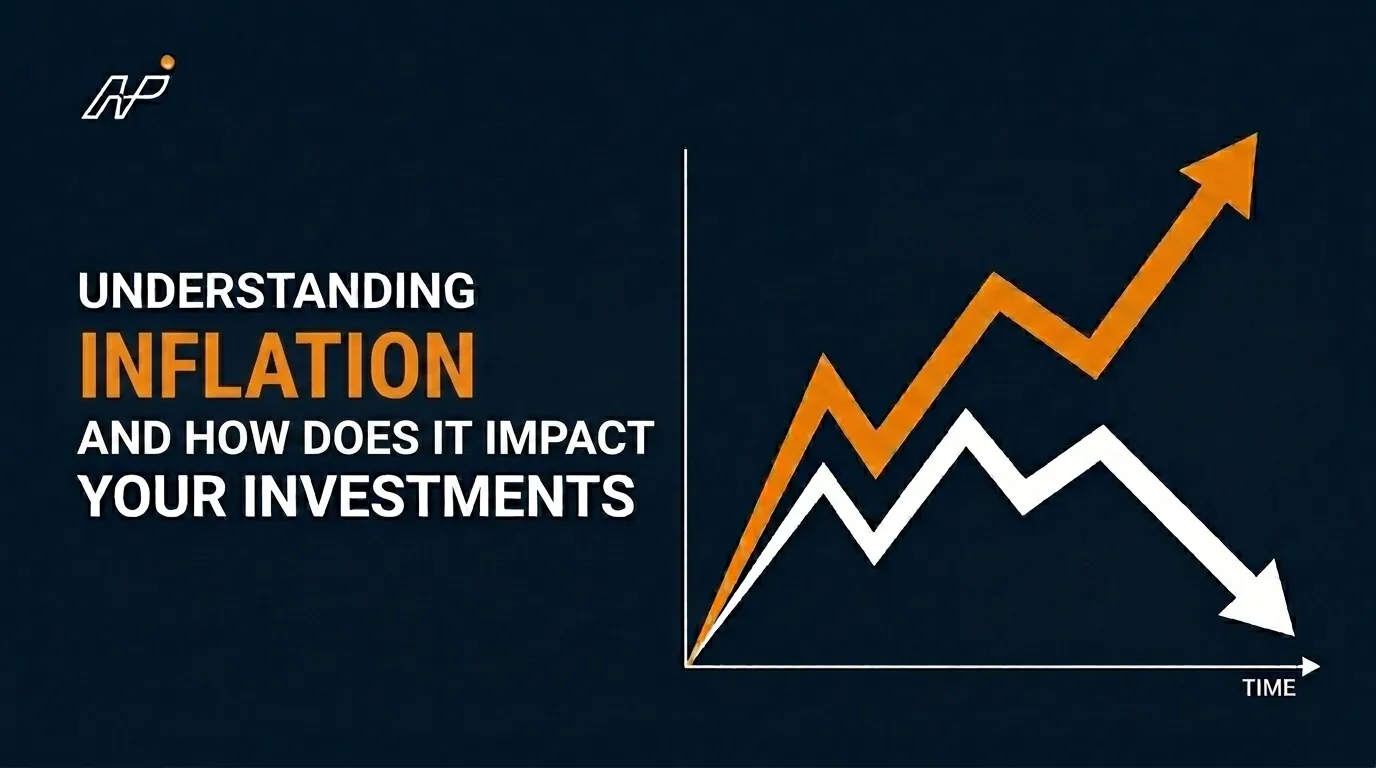
Understanding Inflation and How Does It Impact Your Investments?
Inflation is the rate at which the general level of prices for goods and services rises over time, eroding the purchasing power of money. It affects every financial market — from currencies to commodities to equities — and understanding it is essential for making informed trading and investment decisions.
CPI (Consumer Price Index)
The most widely tracked inflation measure. It measures the price change of a basket of common consumer goods and services. When CPI rises faster than expected, it often triggers a hawkish central bank response (rate hikes), which strengthens the local currency and weakens gold.
Core CPI
CPI excluding volatile food and energy prices. Central banks often focus on Core CPI because it reflects underlying inflation trends more accurately than the headline figure.
PPI (Producer Price Index)
Measures price changes at the producer level (before goods reach consumers). Rising PPI often predicts future CPI increases, making it a leading indicator of consumer inflation.
How Inflation Affects Different Markets
In forex, high inflation weakens purchasing power, but if it triggers rate hikes, the currency may strengthen. Gold is a traditional inflation hedge, performing well when real interest rates are low. While moderate inflation is good for stocks, rapidly rising inflation squeezes margins and triggers aggressive rate hikes.
Regional Significance (SEA Markets)
For traders in Malaysia, Singapore, and surrounding regions, U.S. and European inflation data directly affects the U.S. Dollar, which is the base currency for most commodity prices and a key component of regional currency pairs.
Key Takeaway: Inflation is a direct driver of central bank policy, currency movements, and commodity prices. Monitoring CPI releases on your economic calendar gives you a significant edge in anticipating market reactions.